Design for sun first
Boise has a semi-arid climate, and the warm season is typically dry. July afternoons are hot, rainfall is limited, and an exposed deck can spend hours under direct sun. That makes color, ventilation, fastening, and surface temperature important parts of the material decision.
There is no single best board for every home. A shaded deck used for evening meals has different priorities than a south-facing pool deck or a rental property where simple upkeep matters most.
Three practical material paths
Cedar
Cedar offers natural grain and a warm appearance that works especially well with Idaho landscapes. It can be refinished and repaired, but it should be installed with good airflow and maintained according to exposure and the finish system you choose.
Pressure-treated wood
Pressure-treated lumber is a dependable, budget-conscious option for deck framing and can also be used as the visible surface. Use material rated for the intended exposure, select compatible corrosion-resistant fasteners, and allow for normal drying and movement.
Composite
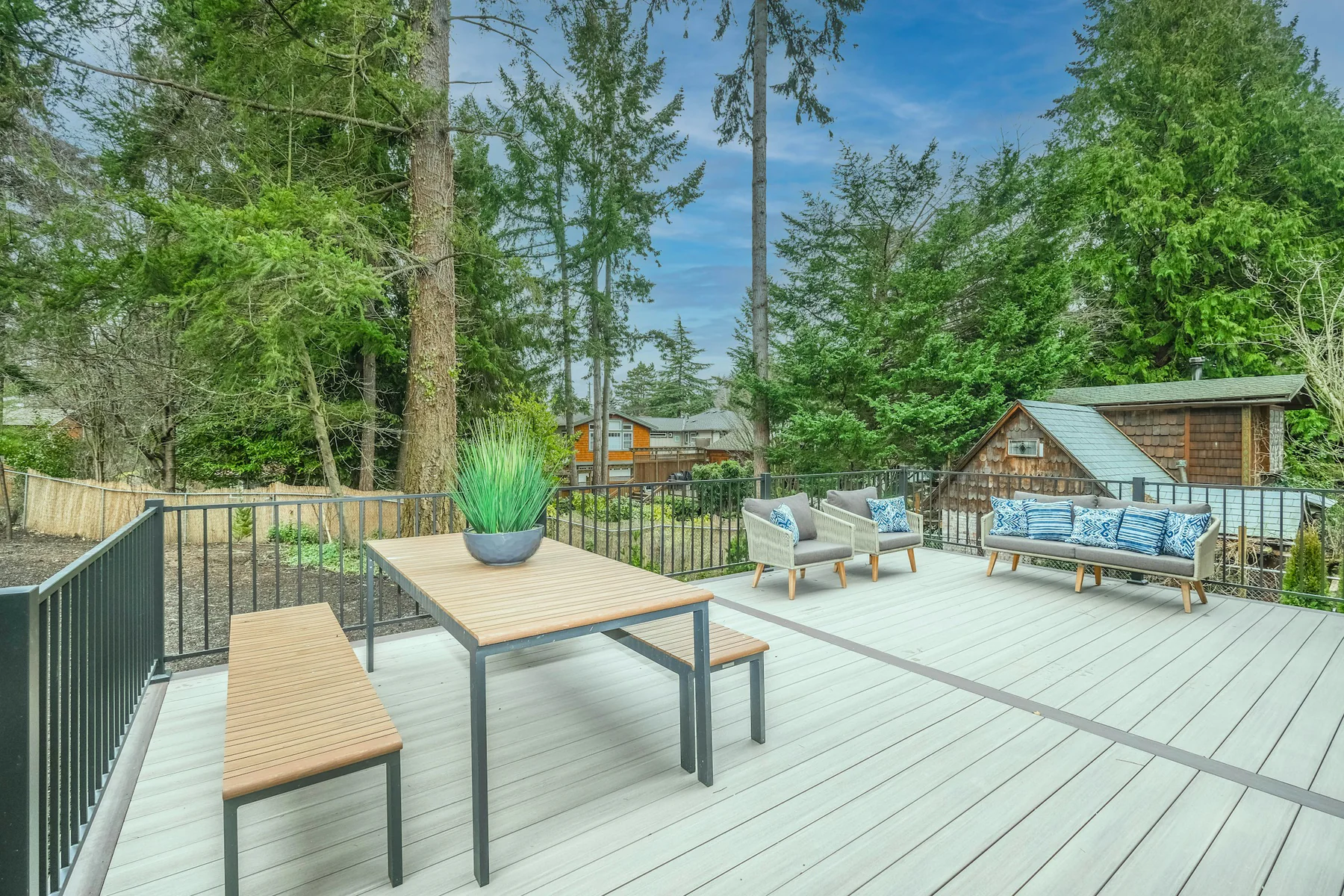
Composite boards provide consistent appearance and avoid routine staining. Color and product line matter: darker boards can feel hotter, and each manufacturer has specific requirements for framing spans, gaps, and fastening.
Details that matter more than the label
A good deck sheds water, dries quickly, and has room for air to move. Keep soil and landscaping away from the framing, plan drainage around the house, and follow the selected board’s installation guide for joist spacing and end gaps.
Test the surface temperature
Place candidate samples in direct afternoon sun before you order. Touch them with your hand and test them with bare feet. A lighter color, partial shade, or a different board line may be more useful than switching material families entirely.
Price the whole assembly
Include framing, stair parts, fascia, railing, fasteners, waste, and delivery when comparing options. A lower board price does not always produce the lowest installed project cost, and a higher first cost may be worthwhile if it matches your maintenance expectations.
Choose around the way you will use the deck
Choose cedar when natural character and repairability lead the list. Choose treated wood when value and structural utility are the priority. Choose composite when consistent appearance and reduced finish maintenance justify the added first cost.
Bring the deck size, sun exposure, preferred color, and budget to Capital Lumber. We can help you compare the complete material list before you commit.
